
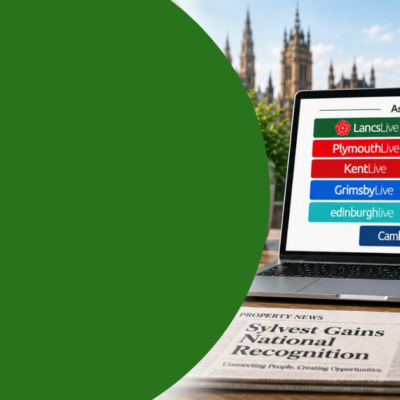
Sylvest Featured Across Leading UK Media Platforms: What It Means for Deal Sourcers & Property Investors
Building a trusted name in the UK property sector takes more than creating a platform. It requires visibility, credibility and…

A property joint venture allows two or more parties to combine their money, skills, property or expertise to pursue an investment opportunity. For example, one partner may provide capital while another brings property sourcing, development or project management experience.
However, a successful joint venture requires much more than finding a partner and agreeing to share the profits. Both sides need clear objectives, defined responsibilities, suitable financial arrangements and a strong legal agreement.
Therefore, investors should plan the relationship carefully before committing to a project. With the right structure, a property joint venture can bring together complementary skills and resources while giving each partner a clear understanding of their role.
A property joint venture is an arrangement where two or more parties work together on a property investment or development project and share the risks, responsibilities and financial results.
Each partner can contribute something different. For instance, one party may provide the investment capital, while another contributes land, property expertise or development experience.
Common contributions include:
The partners then agree how they will manage the project and divide the financial results.
Importantly, a property joint venture does not follow one standard structure. The partners may use a contractual arrangement, company, LLP, partnership or another suitable structure depending on the project.
As a result, investors should obtain appropriate legal and tax advice before choosing the structure for a particular transaction. HMRC provides guidance on how joint ventures can be treated for tax purposes, which is useful background when considering the structure of a property joint venture. HMRC guidance on joint ventures
The right partner can significantly influence the success of a property project. Therefore, partner selection should receive as much attention as the property itself.
Look beyond financial capacity when assessing a potential partner. Instead, consider their experience, reputation, communication style, risk tolerance and ability to contribute to the project.
A strong partnership often brings together different strengths.
For example, imagine that you have extensive experience finding property opportunities but limited development experience. A developer with strong construction and planning knowledge could complement your skills.
Similarly, an experienced investor may have capital but lack the local network needed to identify suitable opportunities.
In that situation, both parties can contribute something valuable to the venture.
Before entering a property joint venture, consider the following:
In addition, ask for relevant evidence of previous projects where appropriate.
A good conversation at the beginning can also reveal whether both parties have similar expectations.
For example, one partner may want to sell the property quickly, while another may prefer to hold it for rental income. Such differences can create serious problems later.
Therefore, discuss these issues before signing an agreement.
Once you identify a suitable partner, the next step involves agreeing on the purpose of the venture.
A clear objective gives both partners a common direction. Without one, disagreements can develop when circumstances change.
Discuss important points such as:
For example, a development joint venture may aim to acquire land, secure planning permission, develop the site and sell the completed properties.
Meanwhile, a buy-to-let joint venture may focus on purchasing a property, improving it and generating long-term rental income.
The partners should write these objectives down and make sure everyone understands them.
Most importantly, agree on what success looks like before the project begins.
After agreeing on the objectives, establish exactly what each partner will contribute.
Financial contributions often receive the most attention. However, operational contributions can prove equally important.
Each partner should understand:
For instance, a refurbishment project could require additional money if construction costs increase.
Therefore, the partners should agree in advance how they will handle additional funding.
One partner might provide further capital, while another might contribute through an agreed loan arrangement. The appropriate approach will depend on the project and legal structure.
Money represents only one form of contribution.
A partner may also contribute:
In addition, assign responsibility for major decisions.
A simple responsibility matrix can help:
| Responsibility | Partner A | Partner B |
|---|---|---|
| Capital contribution | ✓ | |
| Property sourcing | ✓ | |
| Acquisition | ✓ | ✓ |
| Development management | ✓ | |
| Financial reporting | ✓ | |
| Property management | ✓ | |
| Exit strategy | ✓ | ✓ |
This approach reduces uncertainty because each partner knows what they need to deliver.
The financial structure forms one of the most important parts of a property joint venture.
For larger development projects, it can also be useful to understand how professional property advisers approach joint venture arrangements. RICS has published guidance discussing joint ventures in property development, including the importance of structuring the relationship appropriately. RICS guidance on joint ventures in property development
Partners need to agree how they will fund the project, pay costs and distribute profits.
There is no universal profit-sharing percentage for property joint ventures.
Instead, partners should consider the value of each contribution.
For example, one partner may provide most of the capital, while another may provide the land and manage the development. In that case, an equal profit split may not reflect the overall contribution.
Alternatively, two partners may contribute similar amounts of capital and expertise, making an equal split appropriate.
Therefore, the partners should agree the commercial arrangement based on the specific project.
Some larger property projects use a waterfall model to distribute proceeds.
A simple structure could work as follows:
More complex projects can use several levels within the waterfall.
However, partners should not rely on a generic model without understanding the financial and tax consequences.
A solicitor, accountant or other suitable professional can help the partners develop an arrangement that reflects the actual transaction.
Property projects rarely follow the original budget perfectly.
Costs can increase because of:
For this reason, the JV agreement should explain how the partners will handle additional funding.
Clear rules can reduce disputes when the project faces unexpected costs.
A property joint venture agreement provides the framework for the relationship between the partners.
The agreement should clearly record the commercial terms and explain how the partners will handle important decisions throughout the project.
Depending on the project, the agreement may address:
In particular, the agreement should address situations that could create disagreement.
For example, what happens if one partner wants to sell while the other wants to continue?
What happens if the project requires additional capital?
What happens if one partner fails to complete their responsibilities?
What happens if the project makes a loss?
Answering these questions before problems arise can make the partnership much easier to manage.
Property joint ventures can involve significant financial and legal commitments.
Therefore, partners should obtain advice from a solicitor with relevant property and commercial experience.
A professional can help the partners select an appropriate structure and document the agreed terms.
Furthermore, professional advice can help identify potential problems that the partners may not consider during informal negotiations.
A strong agreement should reflect the actual commercial arrangement rather than simply copy a generic template.
Once the partners sign the agreement, the project moves from planning into execution.
At this stage, regular communication becomes essential.
Partners should agree how often they will review the project.
Depending on its size and complexity, they might meet monthly or quarterly.
During each review, they can examine:
In addition, keep a written record of important decisions.
This record helps both partners understand what they agreed and why they made particular decisions.
Property markets can change during a project.
For example, interest rates may increase, construction costs may rise or property demand may weaken.
As a result, partners should compare actual performance with the original business plan.
If the original assumptions no longer work, discuss the situation openly and consider alternative approaches.
The partners might adjust the project timeline, revise the refurbishment plan or reconsider the exit strategy.
Most importantly, both sides should address problems early rather than allowing them to grow.
When the project reaches an important milestone or comes to an end, review the overall performance.
A proper review should examine more than the final profit.
Consider the following:
| Area | What to Review |
|---|---|
| Financial performance | Did the project achieve the expected return? |
| Budget | Did actual costs remain within expectations? |
| Timeline | Did the project meet its planned milestones? |
| Risk management | How effectively did the partners handle unexpected problems? |
| Communication | Did the partners communicate effectively? |
| Decision-making | Did both sides make decisions efficiently? |
| Exit | Did the project achieve the intended exit strategy? |
Furthermore, consider why the project achieved its results.
If the project performed better than expected, identify the decisions that contributed to that performance.
On the other hand, if the project underperformed, identify the assumptions that caused the problem.
Every completed property joint venture can provide useful lessons.
For future projects, partners may decide to:
Ultimately, the goal is to use previous experience to make future investment decisions stronger.
Investors can use different structures depending on the project and the parties involved.
An investor provides capital while a developer manages the development process.
This structure can work when the investor has funding but lacks development expertise.
A landowner contributes a development site while a developer provides the expertise and resources required to develop it.
The parties then agree how they will share the project’s costs and financial results.
An investor may provide capital while a deal sourcer identifies a suitable property opportunity.
For example, the deal sourcer may find an off-market property that matches the investor’s criteria, while the investor provides the capital required to complete the acquisition.
The parties must still agree their responsibilities, commercial terms and exit arrangements before proceeding.
Several investors can combine their capital to pursue a larger opportunity.
However, multiple-partner arrangements require particularly clear rules around ownership, voting rights, funding and decision-making.
A property joint venture can create valuable opportunities, but it also introduces risks.
Common problems include:
Therefore, partners should address these risks before they commit to the project.
A good partnership does not depend on everything going according to plan. Instead, it establishes clear processes for dealing with problems when they occur.
Finding a suitable property opportunity remains an important part of the process.
Investors can discover potential deals through:
In particular, deal sourcers can help investors discover opportunities that may not appear on mainstream property portals.
Investors should still carry out their own due diligence after finding an opportunity.
The fact that a deal comes through a trusted contact or platform does not remove the need to check the property, financial assumptions, legal position and proposed investment structure.
Sylvest connects property investors with deal sourcers and property opportunities.
For investors, the platform provides another way to discover potential property deals that may fit their preferred location, property type or investment strategy.
For deal sourcers, Sylvest provides a structured environment for presenting opportunities to investors who are actively looking for property investments.
As a result, the platform can help bring together two sides of the property investment market.
However, investors should still assess each opportunity independently and complete appropriate due diligence before entering a transaction.
The platform helps with the discovery and connection process, while the investor remains responsible for deciding whether an opportunity fits their objectives.
A property joint venture can bring together capital, expertise, property and professional skills to pursue opportunities that one party may struggle to undertake alone.
However, successful joint ventures require careful planning from the beginning.
First, choose a partner whose skills and objectives complement your own. Next, define each person’s contribution and responsibilities. Then, agree the financial structure and document the commercial terms in a suitable legal agreement.
After the project begins, maintain regular communication and monitor performance against the original plan.
Finally, review the results and use the lessons from the project to improve future investments.
The strongest joint ventures do not rely on trust alone. Instead, they combine trust with clear responsibilities, transparent financial arrangements, proper documentation and regular communication.
For property investors looking to discover new opportunities and connect with deal sourcers, Sylvest provides a structured marketplace for exploring potential property investments.
A property joint venture is an arrangement where two or more parties combine resources such as capital, property, land or expertise to pursue a property investment or development project and share the resulting risks and returns.
The partners agree on the project, their individual contributions, responsibilities, financial arrangements, decision-making process and exit strategy. They then document these terms and work together to complete the project.
There is no standard profit split. The partners should agree on a division that reflects their capital contributions, responsibilities, expertise and the risks they take within the project.
A suitable agreement may cover partner contributions, ownership, profit distribution, responsibilities, decision-making, additional funding, reporting, dispute resolution, exit arrangements and termination provisions.
The agreement should explain how a partner can exit, how their interest will be valued and whether the remaining partners have the right to purchase that interest.
Yes. Joint ventures can involve financial, operational, property market and partnership risks. However, proper due diligence, clear agreements and regular communication can help partners manage these risks.
Investors can find potential opportunities through property networks, estate agents, deal sourcers and specialist property platforms such as Sylvest. However, investors should always carry out their own due diligence before proceeding.
Building a trusted name in the UK property sector takes more than creating a platform. It requires visibility, credibility and…

Real property investment is rarely about finding just any property and hoping it works. For investors, the right opportunity needs…

Finding a property deal is only one part of being a successful Deal Sourcer. The next challenge is finding Property…

Finding a good property deal is only half the job for a deal sourcer. The other half is knowing who…

Discover 8 essential tips for overseas property investors to make informed decisions and maximise returns on your investments.
Comments are closed here.